Finding a perfect partner or making a perfect marriage with the partner you found?
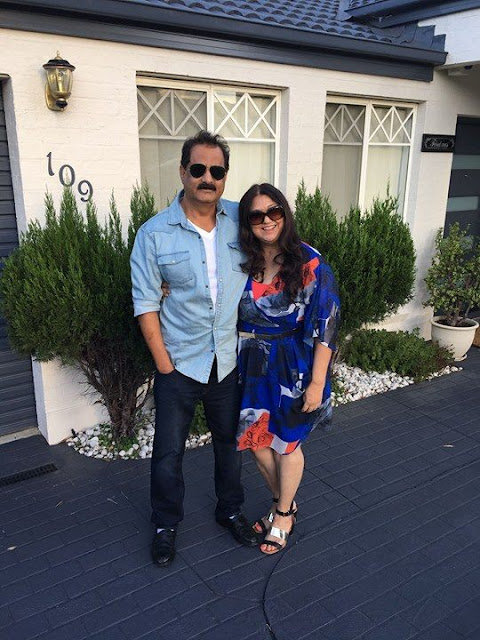
Twenty-five years ago, Vikram and I officially became a family, but if I count the years in which our hearts first found each other, our story truly began thirty-five years ago, which means we have shared more than half of my lifetime together, and even now, with complete honesty and gratitude, I can say that choosing to love him remains one of the best decisions I have ever made.
As I scroll through our photographs, revisit old memories, and recall the music, laughter, arguments, and silences we have shared across decades, what rises within me is not nostalgia for perfection but a deep sense of thankfulness—for resilience rather than ease, for endurance rather than flawlessness, and for a love that has survived precisely because it was imperfect and real.
On our recent anniversary, I posted a simple photograph of us on Facebook, a quiet moment that felt like a small tribute rather than a grand declaration, and the responses arrived quickly, filled with warmth and admiration, calling us lucky, perfect, and enviable, and asking how one might find a relationship like ours. While those words touched me deeply, the truth I carry is simpler and far more honest: the secret to a lasting marriage is not about finding the perfect person, but about choosing to create something meaningful with the person you decide to walk beside.
The first ten years of our relationship—the years before marriage—were romantic, thrilling, and full of those hopeful, impractical promises that youth allows us to make so easily, but I no longer count them in the same way, because marriage is where love stops being an idea and becomes an everyday practice, where the real work begins and ideals are tested by reality.
Marriage teaches you what loyalty, commitment, patience, forgiveness, and partnership truly mean, not through dramatic moments but through ordinary days—quiet mornings, chaotic evenings, disagreements that stretch into silence, shared playlists, late-night laughter, and the countless small moments in which vows slowly take shape.
I am not here to tell a fairytale, because our marriage has never been picture-perfect; we have fought, disagreed, grown apart at times, and even found ourselves sitting across from a divorce lawyer, uncertain whether we would ever meet each other again at the same emotional place. And yet, we stayed—not because we were always aligned, but because we understood the value of what we had built together, and because walking away never felt as meaningful as working through.
Vikram and I are, in many ways, profoundly different people: I lean into humour while he remains serious, he forgets birthdays while I write poetry, I am expressive while he is reserved, and yet over time we have learned to honour these differences rather than resist them. We share certain loves, like melodious music, but we also allow each other the freedom to pursue individual passions, and that space—that permission to be ourselves—has become one of the quiet pillars that keeps us grounded and supportive.
If I am completely honest, we still do not always speak each other’s love language fluently; I express love through words, affirmation, writing, and appreciation, while he offers love through quiet actions—preparing a meal, standing beside me during chaos, helping me steady my breath when the world feels overwhelming. We are still learning, and that is not a failure, because love is not a language one masters once, but one that must be translated again and again across the years.
Early on, I made a quiet promise to myself that has shaped our marriage more than most people realise: never belittle your partner in public. If I have something to say to Vikram, I say it to him, not to the world; I do not joke about him to others or expose our private disagreements to friends or family, and this single discipline has saved us from unnecessary damage more times than I can count. Speaking with love in public and honesty in private makes a difference—it protects dignity, trust, and respect.
Some of the most difficult moments in our marriage have also been the moments that brought us closest, because adversity, when faced together, becomes a bridge rather than a wall, even when there were times we doubted we would survive it. Marriage demands patience and asks for forgiveness daily, quietly, without ceremony, because while holding grudges may feel easier, letting go is what keeps the heart soft enough to continue loving.
I do not believe you need ten years to understand someone before marrying them, because understanding is not a prerequisite—it is a by-product; it grows, deepens, and matures over time. You will never fully know someone before marriage, and some of the most beautiful realisations arrive only after the vows, as you continue to walk together.
What makes a marriage work is not perfect compatibility, shared hobbies, or constant romance, but love, respect, patience, trust, and above all, the willingness to keep choosing each other every single day. You do not need to find the perfect partner; you only need to love the imperfect one you chose with intention, grace, and grit—and that is what allows a marriage not just to last, but to truly thrive.