A Plate of Biryani and the Price of a Woman’s Dignity
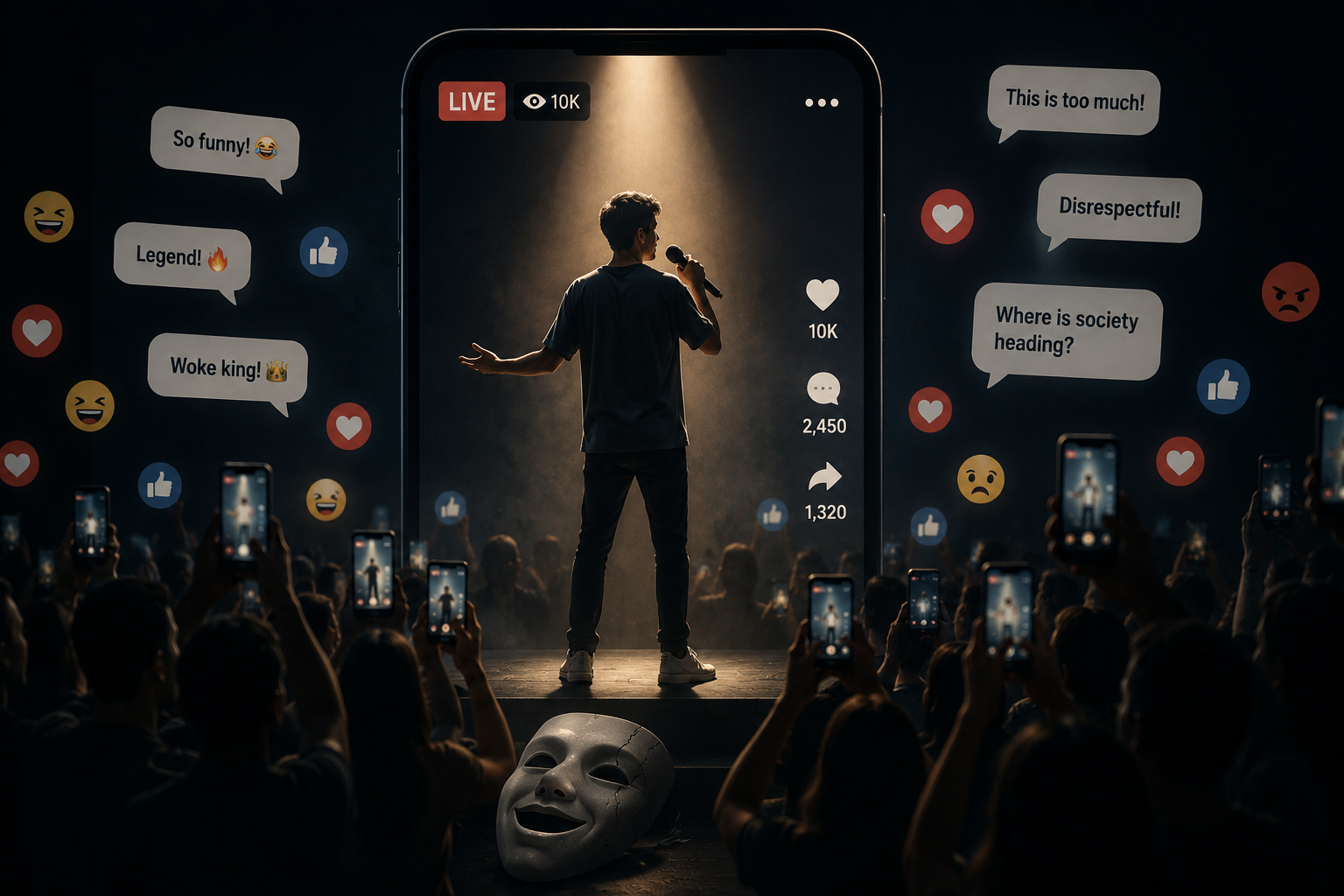
I watched yet another controversy unfold on social media. A stage, a microphone, a cheering audience, and a young man joking that he wanted to “recover the cost of a biryani from his girlfriend.” The audience laughed. The clip spread. Apologies followed. Defences were offered. “It was just comedy.” “It was freedom of speech.” “We did not know what we were saying.”
I am a mother of two daughters. I am also a counsellor, a community leader, and someone who has spent a lifetime working in media and the performing arts. I have seen societies change. I have lived in India, Fiji, and Australia. I have watched cultures evolve, and I have learned to respect differences. But there is one value that should never become negotiable: the dignity of another human being.
A relationship is not a transaction. A dinner is not an investment. A gift is not a contract. No woman owes affection, intimacy, or her body because someone spent money on her.
When young people repeatedly hear jokes that reduce women to commodities, they are not simply hearing humour. They are being exposed to a way of thinking. It is the thinking that says, “I gave something, therefore I deserve something in return.” This sense of entitlement is dangerous because healthy relationships are built on mutual respect and consent, not on accounting.
As a counsellor, I know that rape is not caused by a single joke or a single comedian. Human behaviour is far more complex. But culture matters. Language matters. What we repeatedly laugh at slowly shapes what we are willing to tolerate. A society that casually mocks consent should not be surprised when respect for boundaries begins to erode.
What disturbs me even more is our collective response. We become angry for a few days. Television debates explode. Social media fills with outrage. Statements are issued. Apologies are made. Then we move on to the next controversy.
We did the same after horrific rapes. We marched with candles. We changed our profile pictures. We posted emotional messages. We cried for strangers. Then we returned to our routines, believing that outrage itself was action.
It is not.
The real work begins at home.
It begins when fathers teach their sons that kindness is strength, not weakness.
It begins when mothers refuse to glorify toxic masculinity.
It begins when schools teach respect and consent with the same seriousness that they teach mathematics.
It begins when we stop laughing at jokes that humiliate women simply because they are fashionable or because an influencer said them.
It begins when audiences understand that every click, every share, and every ticket purchased is a vote for the kind of society they want.
I often hear people say, “Youngsters are like this nowadays.”
I disagree.
I know many young men and women who are thoughtful, respectful, and deeply aware of social responsibility. My own daughters grew up in the West, surrounded by freedom and choice, yet they remain deeply connected to their values. They are articulate public speakers, but I have always believed that education is not measured by confidence on a stage. It is measured by the character one displays when nobody is forcing them to be decent.
If either of my daughters ever stood before an audience and degraded another human being for applause, I would not celebrate their popularity. I would feel that somewhere, despite all the degrees and opportunities, we had failed to teach them the difference between influence and integrity.
The internet has given every individual a microphone. Unfortunately, it has not given everyone wisdom. Fame achieved by shocking people is easy. Building a society where women can walk without fear is much harder.
Freedom of speech is one of the foundations of a democratic society. But freedom of speech does not free us from moral responsibility. Every right carries a duty. The right to speak carries the duty to think.
As a mother, I worry.
As a counsellor, I see the emotional damage caused by disrespect and violence.
As a community leader, I know that silence becomes permission.
And as a woman, I refuse to accept that degrading half of humanity is entertainment.
The question is not whether one comedian, one influencer, or one doctor crossed a line.
The real question is this:
What kind of society are we building if we continue to reward those who do?